

Introduction
A 401(k) is one of the most common retirement accounts in the United States. Many people first encounter it when starting a new job, yet they often feel unsure how it works.
Because retirement planning depends heavily on long-term decisions, understanding this account early makes a real difference. Therefore, learning how a 401(k) works can help you build wealth more effectively over time.
In this guide, you will learn what a 401(k) is, how it functions, and why it matters for your financial future.
What Is a 401(k)?
A 401(k) is an employer-sponsored retirement account that allows employees to save and invest money for retirement. Contributions usually come directly from your paycheck.
As a result, saving happens automatically, which makes consistency much easier for many people.
How a 401(k) Works
When you enroll in a 401(k), you choose a percentage of your paycheck to contribute. Your employer then deposits that amount into your retirement account.
In most cases:
- contributions are made before taxes,
- investments grow tax-deferred,
- taxes are paid when you withdraw funds in retirement.
Because of this structure, many workers reduce current taxes while building long-term savings.
Employer Matching: Why It’s Important
Many employers offer a 401(k) match, which means they add money to your account when you contribute.
For example, an employer may match 50% of your contributions up to a certain limit. Therefore, contributing enough to receive the full match often provides an immediate return on your money.
Skipping the match means leaving free money on the table.
401(k) vs IRA: Key Differences
Although both accounts support retirement savings, they serve different roles.
A 401(k):
- is tied to your employer,
- often includes matching contributions,
- has higher contribution limits.
An IRA:
- is opened individually,
- offers more investment flexibility,
- may provide different tax advantages.
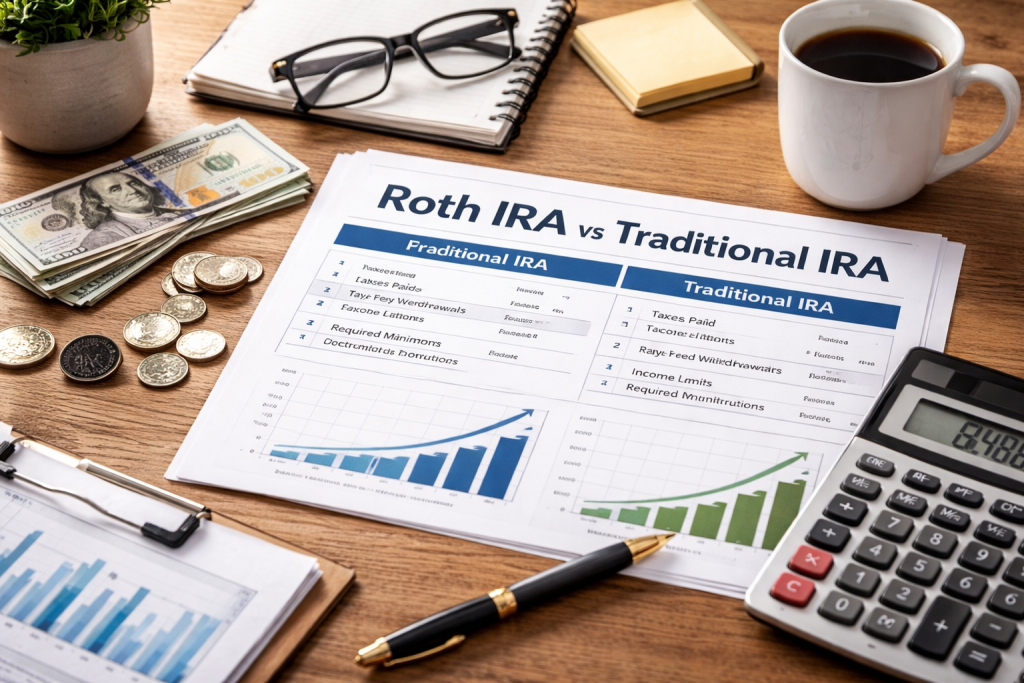
To understand how IRAs compare in detail, read Roth IRA vs Traditional IRA.
👉 Roth IRA vs Traditional IRA: Which Is Better for Beginners?
How a 401(k) Fits Into a Beginner Investing Plan
For many beginners, a 401(k) becomes the first investing experience. Combined with other accounts, it plays a major role in long-term planning.
To see how retirement accounts fit into a complete strategy, read How to Start Investing in the US.
👉 How to Start Investing in the US: A Complete Beginner’s Guide
Contribution Limits and Rules
The US government sets annual contribution limits for 401(k) plans. These limits may change, so checking official guidance matters.
👉 irs.gov
Final Thoughts
A 401(k) is a powerful tool for retirement savings, especially when employer matching is available. By contributing consistently and understanding how the account works, you can build long-term wealth more efficiently.
Starting early and staying consistent often matters more than trying to time the market.

Pingback: 401(k) vs IRA: Key Differences Explained for Beginners